

Tooth Nerve Pain Relief: Causes, Home Remedies & When to See a Dentist
That sharp, electric jolt when cold water hits a tooth. The lingering, throbbing ache that keeps you awake at night. Tooth nerve pain can range from mildly annoying to completely debilitating, and it’s one of the most common reasons patients seek urgent dental care.
At Smilexcellence, we regularly help patients from Richmond and surrounding suburbs find lasting relief from tooth nerve pain. While some home remedies may temporarily ease discomfort, persistent or worsening pain is often a sign that something more serious is happening beneath the surface.
In this guide, we’ll explain what tooth nerve pain is, what causes it, how to relieve tooth nerve pain at home, and when it’s time to book an appointment with your dentist.
What Is Tooth Nerve Pain?
Inside every tooth is a soft inner tissue called the dental pulp, which contains nerves and blood vessels. When this pulp becomes inflamed, irritated, infected or exposed, the nerves become highly sensitive and send pain signals to the brain.
Tooth nerve pain can feel different from person to person. Some people experience a brief, sharp sting when eating or drinking something hot, cold or sweet. Others develop a constant throbbing ache that worsens throughout the day or becomes more noticeable when lying down.
While occasional sensitivity may not always indicate a serious problem, ongoing tooth nerve pain rarely resolves on its own. Instead, it’s your body’s way of telling you that the tooth needs professional attention.
Common Symptoms of Tooth Nerve Pain
Tooth nerve pain often comes with several warning signs rather than occurring on its own. Common symptoms include:
- Sharp pain when eating or drinking hot, cold or sweet foods
- Lingering sensitivity after the trigger has gone
- Constant throbbing or pulsing pain
- Pain when biting or chewing
- Tender or swollen gums around the affected tooth
- Pain that radiates into the jaw, ear or temple
- A tooth that feels loose or sensitive to pressure
- Pain that wakes you during the night
- An unpleasant taste or bad breath if infection is present
If you’re experiencing several of these symptoms together, it’s likely the nerve inside the tooth has become affected.
What Causes Tooth Nerve Pain?
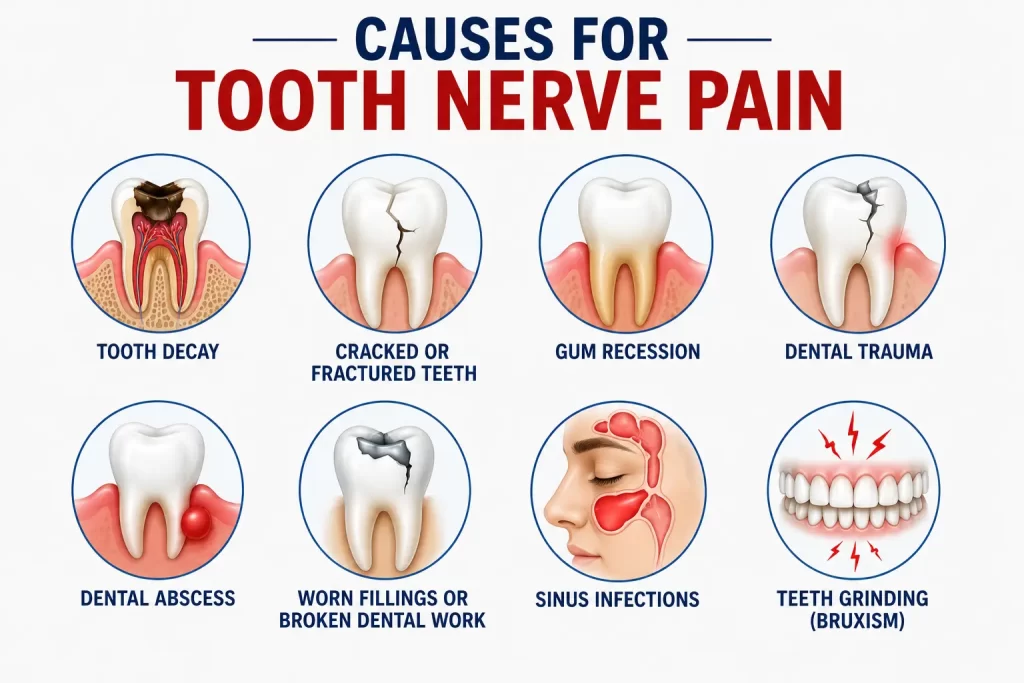
The most effective treatment depends on identifying the underlying cause. These are the conditions we diagnose most often at Smilexcellence.
Tooth Decay
Cavities develop when plaque bacteria produce acids that gradually wear away the enamel and dentine. Once decay reaches the pulp, the nerve becomes inflamed, resulting in pain and sensitivity.
Cracked or Fractured Teeth
Even tiny cracks that are difficult to see can flex when you bite down, irritating the nerve and causing sudden pain that comes and goes.
Gum Recession and Gum Disease
As gums recede, the tooth roots become exposed. Unlike the crown of the tooth, roots are not protected by enamel, making them highly sensitive to temperature changes and touch.
Dental Trauma
Sporting injuries, falls or accidents can chip, crack or loosen a tooth, exposing or damaging the nerve underneath.
Teeth Grinding (Bruxism)
Grinding or clenching your teeth—especially while sleeping—can gradually wear away enamel and place excessive pressure on the nerves inside the teeth, leading to ongoing sensitivity.
Dental Abscess
An untreated infection can develop into an abscess at the root of the tooth, causing severe throbbing pain, swelling, bad breath and sometimes a foul taste.
Worn Fillings or Broken Dental Work
Old fillings, cracked restorations or leaking crowns may allow bacteria to reach the nerve, causing pain that develops over time.
Sinus Infections
The roots of the upper back teeth sit close to the sinus cavities. When the sinuses become inflamed, the pressure can sometimes mimic tooth nerve pain even when the teeth themselves are healthy.
Home Remedies That May Help Relieve Tooth Nerve Pain
Although home remedies won’t fix the underlying problem, they may help reduce discomfort until you can see a dentist.
Warm Salt Water Rinse
Mix half a teaspoon of salt into a glass of warm water and gently rinse several times throughout the day. Salt water can help reduce bacteria and soothe irritated gum tissue.
Apply a Cold Compress
Place an ice pack or cold compress against the outside of your cheek near the painful area for around 15 minutes at a time. This may reduce swelling and temporarily numb the pain.
Take Over-the-Counter Pain Relief
Anti-inflammatory medications such as ibuprofen (where appropriate) or paracetamol can help manage pain until your appointment. Always follow the dosage instructions and seek medical advice if you’re unsure.
Clove Oil (Eugenol)
Clove oil contains a natural compound called eugenol, which has mild numbing and antibacterial properties. Applying a small amount to the affected area may provide temporary relief.
Sleep with Your Head Elevated
Lying flat increases blood flow to the head, which can make throbbing tooth pain feel worse. Sleeping with an extra pillow may help reduce discomfort overnight.
Avoid Foods That Trigger Pain
Until you’ve seen your dentist, avoid extremely hot, cold, sugary or hard foods that may aggravate the exposed nerve.
Remember: These remedies only help manage symptoms temporarily. They do not treat the underlying cause of tooth nerve pain.
When to See a Dentist for Tooth Nerve Pain
Home remedies have their limits. You should arrange a dental appointment promptly if you notice:
- Pain lasting longer than 24 to 48 hours
- Tooth pain that keeps returning
- Swelling in the face, gums or jaw
- Fever or feeling generally unwell
- Difficulty chewing due to pain
- A cracked, chipped or darkened tooth
- Pus, bad breath or an unpleasant taste around the affected tooth
- Severe pain that interrupts sleep or daily activities
These symptoms may indicate an infection affecting the tooth nerve. Left untreated, infections can spread into the surrounding bone and soft tissues, potentially becoming a dental emergency.
What We Often See at Our Richmond Practice
One of the most common mistakes we see is patients hoping the pain will simply disappear.
While mild sensitivity can occasionally settle, ongoing tooth nerve pain usually means the tooth needs treatment. Delaying care often allows the problem to worsen, leading to more extensive treatment than would have been needed earlier.
The good news is that early diagnosis often means simpler, more conservative treatment and a better chance of preserving your natural tooth.
How We Treat Tooth Nerve Pain
At Smilexcellence, our priority is to relieve your pain quickly while preserving your natural teeth whenever possible.
During your appointment, we’ll perform a comprehensive examination, assess the tooth’s vitality and take digital X-rays to identify the underlying cause.
Treatment is then tailored to your individual needs.
Tooth-Coloured Fillings
If decay is caught before it reaches the pulp, we’ll remove the damaged tooth structure and restore it using durable, natural-looking composite fillings.
Root Canal Therapy
If the nerve has become infected or irreversibly inflamed, root canal treatment removes the infected tissue, disinfects the canals and seals the tooth, allowing you to keep your natural tooth.
Dental Crowns
Cracked or weakened teeth can often be strengthened with a custom-made porcelain crown that protects the remaining tooth structure while restoring normal function.
Tooth Extraction
If the tooth cannot be saved, gentle extraction may be the healthiest option to eliminate infection and protect neighbouring teeth.
Custom Night Guards
For patients whose nerve pain is caused by grinding or clenching, a professionally fitted night guard helps protect teeth from further wear and reduces pressure on the jaw.
How to Help Prevent Tooth Nerve Pain
Many causes of tooth nerve pain can be prevented with good oral health habits.
We recommend:
- Brushing twice daily with fluoride toothpaste
- Cleaning between your teeth every day using floss or interdental brushes
- Limiting sugary snacks and acidic drinks
- Wearing a mouthguard during contact sports
- Using a custom night guard if you grind your teeth
- Visiting your dentist every six months for examinations and professional cleans
- Treating small cavities before they develop into larger problems
Preventive dental care is often the simplest and most affordable way to avoid severe tooth pain.
Frequently Asked Questions
Can tooth nerve pain go away on its own?
Occasionally, mild irritation may settle once the trigger is removed. However, persistent tooth nerve pain usually indicates decay, infection, a crack or another issue that requires professional treatment.
Why is tooth nerve pain worse at night?
When you lie down, increased blood flow to the head can place additional pressure on an inflamed tooth nerve, making the pain feel more intense.
Can a damaged tooth nerve heal itself?
If the nerve is only mildly irritated, it may recover once the cause is treated. However, if the pulp has become infected or died, treatment such as root canal therapy or extraction is usually necessary.
Is throbbing tooth pain always caused by an infection?
Not always. It can also result from deep decay, cracked teeth, teeth grinding, trauma or exposed tooth roots. A dental examination is the best way to determine the exact cause.
What’s the fastest way to relieve tooth nerve pain?
Cold compresses, pain relief medication, salt water rinses and avoiding trigger foods may help temporarily. However, the only long-term solution is identifying and treating the underlying dental problem.
Lasting Tooth Nerve Pain Relief Starts with the Right Diagnosis
Tooth nerve pain isn’t something you should simply try to push through. While home remedies and over-the-counter pain relief can help manage symptoms for a short time, they don’t treat the underlying cause.
The sooner you have the tooth assessed, the greater the chance of preserving your natural tooth and avoiding more complex treatment.
If you’re experiencing ongoing tooth nerve pain, don’t wait until it becomes unbearable.
Talk to Your Local Richmond Dentist
If you live in Richmond, Hobartville, Windsor, Clarendon, Kurmond, Wilberforce or Yarramundi, the caring team at Smilexcellence is here to help.
We provide comprehensive examinations and personalised treatment to diagnose the cause of your pain and recommend the most appropriate solution—whether that’s a filling, root canal treatment, crown or another restorative procedure.
Explore our General Dentistry, Emergency Dental Care, Root Canal Therapy, Dental Crowns and Tooth-Coloured Fillings services to learn more about how we can help.
Contact Smilexcellence today to book your appointment and take the first step towards lasting tooth nerve pain relief.
Disclaimer: This article is intended for general information only and should not replace professional dental advice, diagnosis or treatment. If you have severe pain, swelling, fever or signs of infection, contact your dentist as soon as possible or seek emergency medical care if symptoms become severe.

