
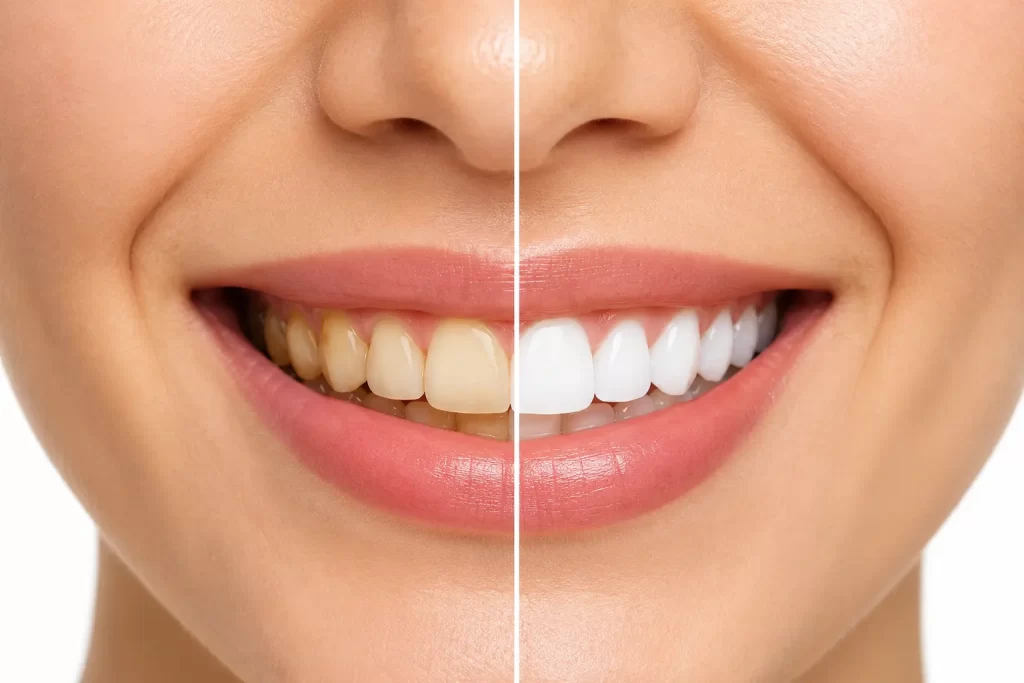
How to Get Rid of Yellow Teeth: Causes, Treatment & Whitening Options
If you have noticed that your teeth look more yellow than they used to, you are not alone. Teeth can naturally become darker with age, while foods, drinks, lifestyle habits, plaque and certain types of internal tooth discolouration can also affect their appearance.
The good news is that yellow teeth can often be made brighter, but the best treatment depends on what is causing the discolouration.
For some people, improving their daily oral hygiene and having a professional clean may be enough to remove surface stains. Others may benefit from professional teeth whitening, while teeth with deeper internal discolouration may require a different cosmetic treatment.
At Smilexcellence in Richmond, NSW, patients can discuss their concerns with a dentist and explore suitable options, including professional Zoom teeth whitening, custom home whitening and cosmetic dental treatments.
Quick Answer: How Can You Get Rid of Yellow Teeth?
The most appropriate way to get rid of yellow teeth depends on the cause.
Surface stains may improve with better brushing, cleaning between your teeth and professional scale and polish. Deeper or persistent discolouration may respond to professional teeth whitening. If the colour comes from inside the tooth and does not respond adequately to whitening, cosmetic treatments such as veneers may sometimes be considered.
Before whitening, it is important to have your teeth and gums examined. Cavities, gum disease, damaged teeth and existing dental restorations can affect whether whitening is suitable and what result you can expect.
Why Are My Teeth Yellow?
Yellow teeth do not necessarily mean that your teeth are unhealthy. Natural tooth colour varies between people, and teeth can become more yellow as enamel changes with age.
Some common causes include:
1. Natural tooth colour and ageing
- Your teeth are not naturally bright white. Underneath the outer enamel is dentine, which has a naturally yellowish colour. As enamel becomes thinner with age, more of the underlying dentine can become visible, making teeth appear yellower.
- This is one reason someone may have yellow-looking teeth even when they brush regularly.
2. Coffee, tea and other staining foods and drinks
- Regular consumption of coffee, tea, red wine and strongly coloured foods can contribute to staining on the outside of the teeth.
- If you regularly consume staining foods and drinks, maintaining good oral hygiene and having professional dental cleans can help manage surface staining.
3. Smoking and tobacco
- Smoking can contribute to tooth discolouration and staining. It can also have a significant impact on your overall oral health.
- If your teeth have become noticeably darker over time, a dentist can assess the type of staining and discuss appropriate treatment.
4. Plaque and tartar build-up
- Plaque is a sticky layer that develops on teeth. If it is not removed effectively, it can contribute to staining and other oral health problems.
- Brushing twice a day and cleaning between your teeth daily are important parts of maintaining good oral hygiene. The Australian Dental Association recommends brushing twice daily with fluoride toothpaste, cleaning between the teeth once a day and having regular dental check-ups and professional cleaning.
5. Enamel wear
- Enamel naturally changes over time. As the enamel becomes thinner, the naturally darker dentine underneath can become more noticeable.
- This means that simply brushing harder is not the answer. In fact, overly abrasive products can potentially damage enamel rather than creating a healthier-looking smile.
6. Internal tooth discolouration
- Not all yellow or dark teeth are caused by surface stains.
- A tooth may become discoloured following an injury or certain dental conditions. Teeth that have undergone root canal treatment can also change colour. Some medications taken during childhood can cause internal tooth discolouration.
- This type of discolouration may need a dental assessment because whitening does not produce the same result for every type of stain.
Why Are My Teeth Yellow Even Though I Brush Them Every Day?
If you brush your teeth every day but they still look yellow, it does not necessarily mean you are doing something wrong.
Brushing removes plaque and helps maintain oral health, but it cannot change your natural tooth colour. It may also have limited effects on deeper discolouration.
For example, if the yellow appearance is mainly caused by the natural colour of your dentine showing through the enamel, brushing will not make your teeth dramatically whiter.
Similarly, some internal stains do not respond to ordinary toothpaste.
If your teeth remain yellow despite good brushing and flossing, a dental examination can help determine whether you have surface staining, natural tooth colour or deeper discolouration.
7 Ways to Get Rid of Yellow Teeth
1. Brush twice a day with fluoride toothpaste
Brush your teeth twice a day using fluoride toothpaste and a suitable toothbrush.
Focus on cleaning all tooth surfaces gently rather than brushing aggressively. Excessive pressure is not a shortcut to whiter teeth.
2. Clean between your teeth every day
A toothbrush cannot effectively clean every area between your teeth. Floss or an appropriate interdental cleaning method can help remove plaque and food debris from these areas.
Daily interdental cleaning is recommended as part of good oral hygiene.
3. Limit frequent exposure to staining foods and drinks
You do not necessarily need to eliminate coffee, tea or other foods you enjoy. However, if staining is a concern, reducing frequent exposure to highly pigmented foods and drinks can help limit new surface staining.
Good oral hygiene after meals and regular dental care can also help.
4. Have a professional dental clean
If yellowing is partly caused by plaque, tartar or surface staining, a professional clean may make your teeth look cleaner and brighter.
A dental check-up can also determine whether there are other issues contributing to the appearance of your teeth.
Smilexcellence’s general dentistry services include preventive dental care and regular check-ups designed to help patients maintain their natural teeth.
5. Consider professional teeth whitening
If you want a noticeably whiter smile, professional teeth whitening may be an appropriate option.
Smilexcellence’s Zoom Teeth Whitening treatment is designed to brighten discoloured teeth. The practice also offers custom-made home whitening trays and professional-strength whitening gel for patients who prefer to whiten at home under dental guidance.
The Australian Dental Association recommends that teeth whitening involving stronger bleaching products be assessed and supervised by appropriately trained dental practitioners. A dental examination should be performed before whitening to identify problems that could make treatment unsuitable or uncomfortable.
6. Choose a custom home whitening option
Some people prefer to whiten their teeth at home rather than having an in-chair treatment.
Smilexcellence provides custom-made whitening trays and professional-strength whitening gel. The practice advises that results appear more gradually with home whitening than with in-chair treatment, and the trays can be reused for future top-ups when additional gel is supplied.
A custom approach can be particularly useful when your dentist believes a lower-strength whitening gel is more appropriate for you.
7. Consider veneers when whitening is not enough
Whitening is not suitable for every type of discolouration.
If a tooth has significant internal staining that does not respond sufficiently to whitening, veneers may sometimes be considered.
Smilexcellence’s dental veneer service explains how porcelain and composite resin veneers can be used to improve the appearance of stained, worn, chipped or misshapen teeth.
However, veneers are not simply a replacement for teeth whitening. They involve a different type of cosmetic dental treatment, so your dentist should first determine whether they are appropriate for your teeth and your goals.
Can You Whiten Yellow Teeth Naturally?
There is a big difference between removing surface stains and actually changing the colour of your teeth.
Some internet remedies promise to whiten teeth using household ingredients or highly abrasive substances. These approaches are not necessarily safe or effective.
For example, Smilexcellence has previously addressed concerns about charcoal toothpaste, explaining that its abrasive action may remove some surface staining but can also wear down enamel. As enamel becomes thinner, the naturally darker colour underneath may become more noticeable.
For this reason, it is better to avoid aggressive DIY whitening methods and ask a dental professional which option is appropriate for your teeth.
Does Whitening Toothpaste Get Rid of Yellow Teeth?
Whitening toothpaste can help with some surface staining, but it cannot provide the same type of result as professional bleaching.
If your teeth are naturally yellow because of the colour of the underlying dentine, a toothpaste cannot change that underlying tooth colour.
If you are looking for a significant improvement rather than simply removing surface stains, speak with your dentist about professional whitening options.
Can Yellow Teeth Become White Again?
In many cases, yellow or stained teeth can be made visibly brighter, but the result depends on the reason for the discolouration.
Professional whitening can be effective for many types of tooth discolouration. However, existing dental restorations such as crowns, bridges and veneers do not change colour during whitening.
This is why an assessment before whitening is important. Your dentist can examine your teeth, identify the likely cause of the colour change and explain what result is realistic.
Is Professional Teeth Whitening Safe?
Professional teeth whitening can be safe when the patient is appropriately assessed and the treatment is provided or supervised by a qualified dental practitioner.
The Australian Dental Association notes that temporary tooth sensitivity and soft-tissue irritation are among the most common side effects of professional bleaching. It also recommends a comprehensive dental examination before whitening.
At Smilexcellence, the suitability of whitening is assessed before treatment. The practice checks for issues such as tooth decay and gum disease and considers the cause of the discolouration before recommending an appropriate whitening approach.
What Happens Before Teeth Whitening?
A whitening consultation should be more than simply applying whitening gel.
Your dentist may assess:
- The overall health of your teeth and gums
- Existing cavities or dental problems
- The type and cause of discolouration
- Tooth sensitivity
- Existing crowns, bridges or veneers
- Whether whitening is likely to achieve the result you want
At Smilexcellence, patients can also discuss their cosmetic concerns and treatment options as part of a personalised dental consultation.
This approach helps you avoid paying for a treatment that may not address the actual cause of your tooth discolouration.
How Long Does Teeth Whitening Last?
Teeth whitening is not permanent.
The longevity of your results depends on factors such as your diet, lifestyle, oral hygiene and whether you regularly consume staining foods and drinks.
Maintaining good oral hygiene and attending regular dental check-ups can help you maintain your smile. If appropriate, your dentist may also recommend whitening top-ups.
When Should You See a Dentist About Yellow Teeth?
Consider booking a dental appointment if:
- Your teeth have suddenly changed colour.
- One tooth is significantly darker than the others.
- Your teeth remain yellow despite good oral hygiene.
- You have tooth sensitivity or pain.
- You notice holes, cracks or damaged teeth.
- Your gums bleed, swell or feel painful.
- You are considering professional teeth whitening.
- You have crowns, veneers or other dental restorations and want a whiter smile.
A sudden colour change in an individual tooth can have a different cause from general surface staining, so it is worth having it assessed rather than simply applying whitening products.
Yellow Teeth: Which Treatment Is Right for You
| What you are noticing | Possible approach |
| Mild surface staining | Improved oral hygiene and professional cleaning |
| Coffee or tea staining | Professional cleaning and, where appropriate, whitening |
| General yellowing with age | Dental assessment followed by suitable whitening if appropriate |
| Persistent deeper discolouration | Professional assessment and whitening options |
| Severe internal staining | Whitening may have limited results; veneers may be considered |
| Yellowing with pain or sensitivity | Dental examination before cosmetic treatment |
| Existing crowns or veneers | Assessment before whitening because restorations do not whiten |
The right treatment should always be based on the condition of your teeth rather than simply choosing the strongest whitening product.
Get a Professional Assessment for Yellow Teeth in Richmond
If you are searching for how to get rid of yellow teeth, the first step is understanding why your teeth look yellow.
At Smilexcellence in Richmond, NSW, patients can discuss tooth discolouration, oral health and cosmetic goals with a dental team offering general and cosmetic dentistry. Treatment options include professional Zoom teeth whitening, custom home whitening, cosmetic consultations and veneers.
The practice is located at 47 East Market Street, Richmond, and provides care for patients from Richmond and surrounding areas including Hobartville, Windsor, Clarendon, Kurmond, Wilberforce and Yarramundi.
If you are unsure whether you need a professional clean, teeth whitening or another cosmetic treatment, a dental assessment can help you understand your options before making a decision.
The Bottom Line
If your teeth look yellow, do not assume that brushing harder or using a DIY whitening remedy is the answer.
First, identify the cause. Surface stains may improve with professional cleaning and good oral hygiene. If you want a noticeably whiter smile, professional whitening may be appropriate. If the discolouration is deeper and does not respond to whitening, your dentist can discuss alternative cosmetic treatments.
The safest approach is to have your teeth and gums assessed first so you can choose a treatment that matches your oral health, the cause of your discolouration and the result you want.

