
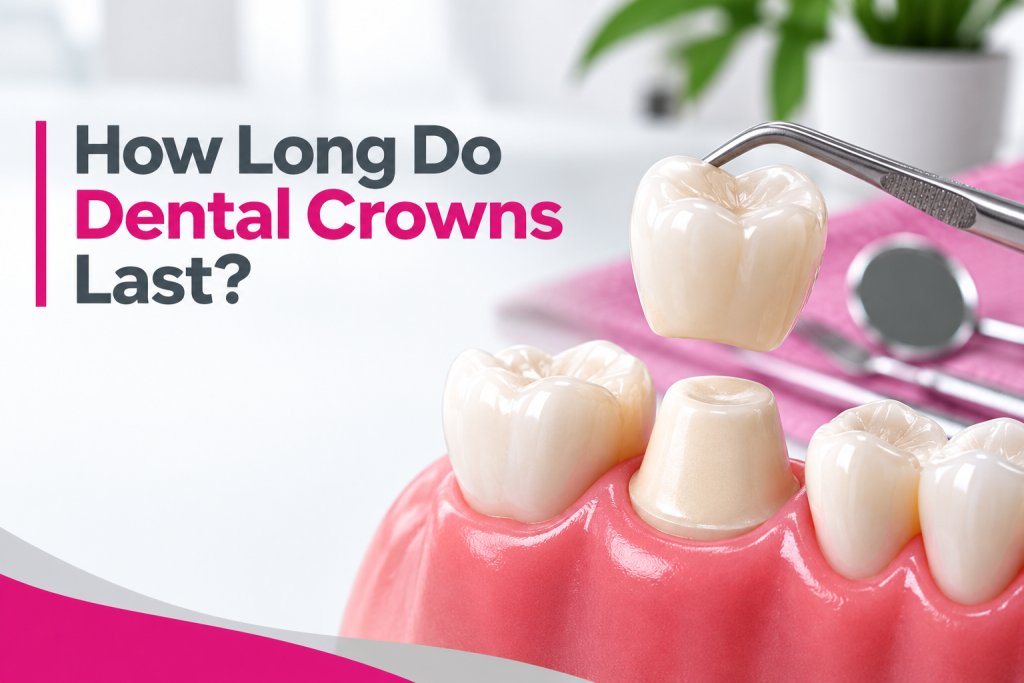
How Long Do Dental Crowns Last? Lifespan, Care and Replacement
A dental crown can restore the appearance, strength and function of a damaged tooth. It is designed to protect the remaining tooth structure and help you chew comfortably. But one of the most common questions patients ask is: how long do dental crowns last?
A well-maintained dental crown can often last between 5 and 15 years, although some crowns may remain functional for 20 years or longer. The exact lifespan depends on the crown material, the condition of the tooth underneath, your oral hygiene, bite pressure and whether you grind or clench your teeth.
A crown does not automatically need to be replaced once it reaches a particular age. If it is still secure, comfortable and protecting a healthy tooth, your dentist may recommend keeping it. However, regular dental check-ups are important because problems can sometimes develop around or underneath a crown before you notice symptoms.
How Long Do Dental Crowns Last?
Most dental crowns last approximately 5 to 15 years with proper care. Some may last longer, depending on the type of crown and the condition of the supporting tooth. The Australian Dental Association notes that a realistic expected lifespan for a conventional crown is generally around 7 to 10 years, although many crowns continue functioning beyond this period.
There is no exact expiry date for a dental crown. Two people with the same type of crown may experience different results because their oral health, bite, diet and dental habits are different.
A crown may last longer when:
-
The tooth underneath is healthy and strong.
-
The crown fits accurately.
-
You brush and clean between your teeth every day.
-
You attend regular dental examinations.
-
You avoid biting hard objects.
-
Teeth grinding or clenching is managed.
-
You respond quickly to chips, looseness or discomfort.
The condition of the natural tooth beneath the crown is particularly important. Although the crown itself cannot develop tooth decay in the same way as natural enamel, bacteria can collect around the crown’s edge and cause decay in the remaining tooth structure.
What Factors Affect Dental Crown Lifespan?
Several factors can influence how long your crown lasts.
1. The Type of Crown Material
Dental crowns can be made from different materials, including porcelain, porcelain-fused-to-metal, zirconia, lithium disilicate, metal alloys and other ceramic materials.
Your dentist will recommend a material based on factors such as:
-
The position of the tooth.
-
How much chewing pressure the tooth receives.
-
The amount of natural tooth remaining.
-
Your bite and grinding habits.
-
Your aesthetic preferences.
-
The strength and appearance required.
The type of crown selected may also influence the overall treatment cost. If you are considering treatment, you can learn more about dental crown cost in Richmond and the factors that may affect the price.
2. The Health of the Tooth Underneath
A crown can protect a weakened tooth, but it cannot completely remove the risk of future problems.
The tooth underneath may be affected by:
-
New decay around the crown margin.
-
A crack or fracture.
-
Infection inside the tooth.
-
Previous root canal complications.
-
Loss of supporting tooth structure.
-
Gum disease around the tooth.
If the natural tooth becomes severely damaged, the crown may need to be removed so your dentist can assess and treat the underlying problem.
3. Your Oral Hygiene Routine
Good oral hygiene helps protect both your crown and the natural tooth underneath it.
Plaque can collect around the gumline and crown margins. If it is not removed, it may contribute to gum inflammation or decay around the edge of the crown.
To care for your crown:
-
Brush twice a day with fluoride toothpaste.
-
Clean between your teeth daily.
-
Pay attention to the gumline around the crown.
-
Attend regular dental check-ups and professional cleans.
-
Follow any personalised advice from your dentist.
You should care for a crowned tooth much like your natural teeth.
4. Teeth Grinding and Clenching
Teeth grinding, also called bruxism, can place excessive pressure on dental crowns.
Grinding may increase the risk of:
-
Cracks.
-
Chips.
-
Wear.
-
Loosening.
-
Damage to the natural tooth underneath.
If you grind your teeth at night or regularly clench your jaw, your dentist may recommend a custom night guard. A night guard may help reduce damaging forces, but it should be professionally assessed and fitted.
5. Your Diet and Daily Habits
Dental crowns are strong, but they are not indestructible.
Repeatedly biting hard objects or foods may increase the risk of damage. Try to avoid:
-
Chewing ice.
-
Biting pens or fingernails.
-
Opening packaging with your teeth.
-
Hard lollies.
-
Very hard nuts.
-
Sticky foods that may pull at a loose crown.
These habits can damage or dislodge a crown, particularly if it is already weakened.
6. The Crown’s Fit and Placement
A well-fitting crown should sit securely over the prepared tooth and work comfortably with your bite.
If a crown does not fit correctly, it may create areas where plaque and food collect. An inaccurate bite may also place extra pressure on the crown or the tooth.
Your dentist will assess the crown’s fit, contact points, appearance and bite before it is permanently cemented.
How Can You Make Your Dental Crown Last Longer?
Although no crown lasts forever, good habits can help extend its useful life.
Brush and Floss Every Day
Brush twice daily with fluoride toothpaste and clean between your teeth once a day. Use gentle movements around the crown and gumline.
If traditional flossing is difficult, ask your dentist about suitable alternatives such as interdental brushes or water flossers.
If you experience ongoing discomfort after dental treatment, read more about tooth filling pain after months and why a dental assessment may be needed.
Avoid Using Your Teeth as Tools
Do not use your crowned tooth to:
-
Open bottles.
-
Tear plastic.
-
Cut thread.
-
Bite through packaging.
-
Hold objects.
These actions can place sudden pressure on the crown and may cause cracking or loosening.
Manage Grinding and Clenching
Tell your dentist if you wake with jaw soreness, headaches, tooth sensitivity or signs of wear. These may be associated with grinding or clenching.
A dentist can assess your bite and discuss whether a custom night guard or other treatment may be appropriate.
Attend Regular Dental Appointments
Regular check-ups allow your dentist to assess:
-
Crown stability.
-
Signs of wear or damage.
-
Decay around the crown.
-
Gum health.
-
The condition of the underlying tooth.
-
Changes in your bite.
Early detection may allow a problem to be managed before more extensive treatment is needed.
Follow Care Instructions After Crown Placement
Your dentist may give you specific instructions after placing a crown. Follow these carefully, especially while the crown is settling or if you have a temporary crown.
Temporary crowns are not designed to last as long as permanent crowns and may require extra care.
What Are the Signs a Dental Crown Needs Replacing?
A dental crown may need repair, recementing or replacement if you notice changes in its appearance, comfort or stability.
Contact your dentist if you experience:
A Loose Crown
A crown that moves, rocks or feels as though it may come off should be checked promptly. Do not attempt to glue it back yourself.
Cracks or Chips
Small chips may sometimes be repairable, while larger fractures may require replacement. The appropriate treatment depends on the size and position of the damage.
New or Ongoing Pain
Pain when biting, sensitivity, throbbing or discomfort around a crowned tooth may indicate a problem with the crown, the tooth underneath or the surrounding tissues.
Bad Taste or Bad Breath
A persistent bad taste or unpleasant smell around a crown may be associated with trapped food, gum problems, decay or a loose restoration.
Swollen or Bleeding Gums
Gum swelling, tenderness or bleeding around a crown should be assessed, particularly if the symptoms continue despite good oral hygiene.
A Change in Your Bite
If the crown suddenly feels too high, uncomfortable or different when you bite, arrange a dental review.
Visible Wear or Damage
A crown that appears significantly worn, discoloured, fractured or poorly matched may need assessment. Cosmetic changes alone do not always mean the crown must be replaced, but your dentist can advise you on the available options.
Cleveland Clinic recommends contacting a dentist for symptoms such as a loose crown, bad taste, cracks, pain or other changes around the restoration.
Does a Dental Crown Need Replacing After 10 Years?
Not necessarily.
A crown that is 10 years old does not automatically need to be replaced. If it is comfortable, stable, well-fitting and the tooth underneath is healthy, your dentist may recommend monitoring it.
Replacement may be recommended when:
-
The crown is cracked or fractured.
-
The crown has become loose.
-
Decay has developed around the crown.
-
The tooth underneath is damaged.
-
The crown no longer fits correctly.
-
Gum disease is affecting the area.
-
The crown is causing bite problems.
-
The appearance or colour is no longer suitable.
-
The crown cannot be repaired effectively.
If you have recently experienced a damaged filling or discomfort in a previously restored tooth, your dentist may need to assess whether a filling, crown or another treatment is appropriate. You can also read about what to do after losing a dental filling.
Can a Dental Crown Be Repaired Instead of Replaced?
Sometimes, yes. The treatment depends on the type and extent of the problem.
Your dentist may consider:
-
Polishing a minor rough area.
-
Repairing a small chip.
-
Recementing a crown that has come loose.
-
Treating decay around the crown.
-
Adjusting the bite.
-
Replacing the crown if the damage is extensive.
If you are comparing crowns with another cosmetic option, our guide to crowns vs veneers explains how these treatments differ and when each may be suitable.
What Happens During Dental Crown Replacement?
If your crown needs replacing, the process may involve several steps.
1. Examination
Your dentist will examine the crown, gums and underlying tooth. X-rays may be recommended if there is concern about decay, infection or damage below the crown.
2. Removal of the Existing Crown
The existing crown is carefully removed so the dentist can assess the tooth underneath.
3. Treatment of the Tooth
If decay, infection, a fracture or gum problems are found, these may need to be treated before a new crown is placed.
4. Preparation for the New Crown
The tooth may need to be reshaped or rebuilt so it can support the replacement crown.
5. Temporary Crown
A temporary crown may be fitted while the permanent crown is being made.
6. Placement of the Permanent Crown
At the final appointment, your dentist checks the crown’s fit, appearance and bite before securing it in place.
How Long Do Crowns Last on Root Canal-Treated Teeth?
A crown is often recommended after root canal treatment when the tooth has lost substantial structure or is at increased risk of fracture.
The crown can help protect the remaining tooth, but the long-term result depends on:
-
How much natural tooth remains.
-
The quality of the root canal treatment.
-
The crown’s fit.
-
Oral hygiene.
-
Bite pressure.
-
Cracks or damage in the tooth.
-
Regular dental monitoring.
A root canal-treated tooth can still develop problems, so it is important not to ignore pain, swelling or changes around the crown.
How Long Do Dental Crowns Last on Back Teeth?
Back teeth experience significant chewing pressure, so the location of the crown matters.
Molars may be exposed to stronger biting forces than front teeth, particularly if you grind or clench. Your dentist will consider the tooth’s position, bite, remaining structure and the most suitable material when planning treatment.
This is one reason crown material and design should be selected for the individual tooth rather than based only on appearance.
When Should You See a Dentist?
Book a dental appointment if your crown:
-
Feels loose.
-
Has cracked or chipped.
-
Causes pain when biting.
-
Develops new sensitivity.
-
Has swelling around it.
-
Traps food repeatedly.
-
Feels different from before.
-
Has a visible gap at the gumline.
-
Falls out.
Seek prompt dental care for significant pain, swelling, trauma or signs of infection.
Final Thoughts
So, how long do dental crowns last? Most crowns last approximately 5 to 15 years, while some may remain functional for much longer. The key is not simply the age of the crown, but the condition of the crown and the natural tooth underneath it.
Brushing and flossing daily, avoiding damaging habits, managing teeth grinding and attending regular dental check-ups can help protect your investment.
If your crown is loose, damaged, painful or several years old, a dental examination can help determine whether it should be monitored, repaired or replaced.
Need advice about an existing or replacement dental crown? Contact SmilExcellence to arrange an assessment and discuss the best option for your tooth.

